Description
SCJ50 and SCJ100 – Self-Locking Cube Jack
Systems Available for Sale or Rent
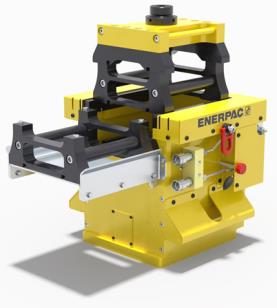
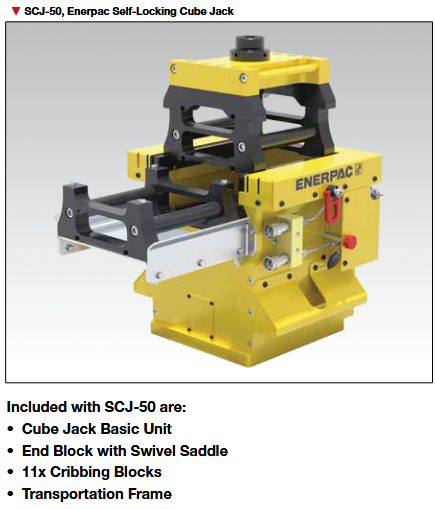
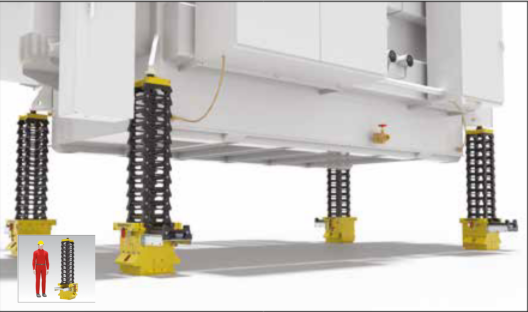
The Self-Locking Cube Jack is the new standard in incremental jacking. It offers a safer and more efficient alternative to conventional jack-and-pack (climbing jacks) used with wooden cribbing. It has a significantly smaller footprint and can be used with any Enerpac split flow pumps or EVO synchronous lifting systems.
Key features SJ50:
▪ The system is mechanically locked during lifting and lowering operations
▪ Can be operated with standard Enerpac 10,000 psi (700 bar) pumps
▪ Capacity: 56 tons (500 kN) ea.
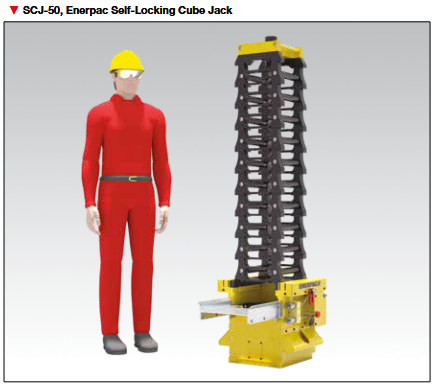
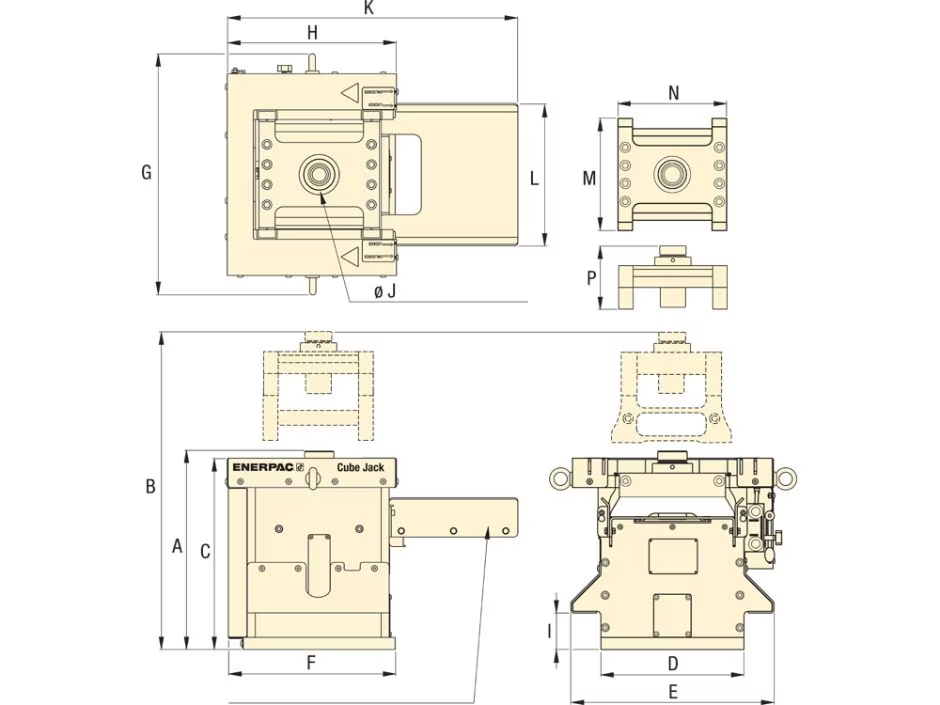
▪ Max Height: 81.4” (2068mm)
▪ Low starting height of 19.4” (494mm)
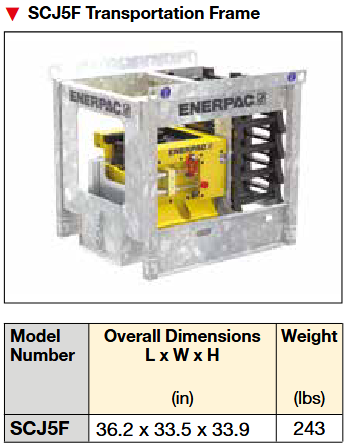
▪ Easily moveable via transport frame, forklift tabs on the jack base, or hoist D-rings
▪ Jobs completed with 50% fewer cycles than climbing jacks
▪ Includes provisions for attaching a stroke sensor for use with Enerpac EVO Synchronous Lift Systems
▪. Includes SCJ50 End Block, Cribbing Block, Storage Frame, Heavy Duty Hydraulic Hoses
Key features SJ100:
▪. The system is automatically mechanically locked after the lifting or lowering stroke
▪. Self-aligning steel cribbing blocks save time, improve side load, and eliminate the need for wooden cribbing materials
▪. Jobs are completed more efficiently due to simplified operation sequence with 50% less cycles than climbing jacks
▪. End block with adjustable swivel saddle allows fine adjustment during set-up: 1.97-inch screw extension
▪ Low starting height of 21.97 inches; maximum jacking height up to 118.3 inches
▪ Can be operated with Enerpac’s 10,000 psi hydraulic power units
▪ Lloyds witness tested to 125% of maximum working load
▪. Includes SCJ-100 End Block, Cribbing Block, Storage Frame, Heavy Duty Hydraulic Hoses
Operation:
The system uses steel cribbing blocks to incrementally lift or lower a load. Cribbing blocks can be inserted or removed from the insertion table by hand. The system only needs two hoses connected from a compatible pump. Switching the configuration from lifting to lowering is easily done by changing the lever on the side of the machine.